About Me

Lu Peng Qiang | Male
Date of Birth: January 1988
Height: 183cm
Hobbies: Outdoor hiking
Education: Shanghai Normal University, Undergraduate Incomplete
(I cannot accept the compulsory education of communist socialist ideology in Chinese universities, as it is in serious conflict with my personal cognition and beliefs. Therefore, I gave up the undergraduate certificate and completed the study of professional and technical courses.)
Professional Titles: Information System Integration Project Management Engineer
Digital Simulation Engineer
Industrial Designer
Automation Engineer

Personal Traits & Professional Experience:
Sincere and friendly, I love life and believe in God the Creator. I am passionate about work and have an almost fanatical obsession with learning and accumulating new technologies. With 16 years of working experience in a science and technology service company in Shanghai, China, more than a decade of practice has allowed me to gain comprehensive applied knowledge across various technical dimensions. I am proficient in all processes from design and construction to hardware and software development,

and from conceptualization to project implementation, boasting a well-rounded technical reserve.

I am well-versed in the systematic management of the entire project life cycle. Having undertaken nearly 100 diverse projects over more than ten years, I have accumulated abundant management experience with accurate control and predictive judgment of projects. I have an extensive network of technical talents, which enables me to help the team reduce human resource costs under the condition of limited and controllable budgets. I excel at the system integration of new technologies and have rich practical experience in projects involving digital twins, IoT technology applications and virtual reality simulation.

My Skills

Professional Skills

Skill 1: Leverage my comprehensive technical reserves to independently complete the design, simulation, development, and mass production of industrial application equipment.
Skill 2: MCU development, embedded development, industrial automation, and IoT hardware & software solutions. Proficient in circuit board design using Altium Designer; familiar with analog and digital circuits, and skilled in manual soldering of circuit board components; master the maintenance of weak current systems.
Skill 3: Create 3D renderings with Autodesk Maya & 3ds Max, and draw construction drawings with Autodesk CAD.
Skill 4: Familiar with programming languages including C, Python, and C++; adept at developing digital twin and virtual simulation systems based on the Unity3D environment.
Skill 5: Integrated solutions for various multimedia projects, including multi-channel projection (fox screen, folded screen, spherical screen, curved screen), CAVE cinema, phantom imaging, holographic projection, and interactive projection integration & development.
Skill 6: Industrial modeling and mechanical design using SolidWorks; capable of independently completing the assembly and design of the appearance and internal structure of a single product.
Skill 7: Independently develop WebGL and Web3D; familiar with the Three.js engine, and able to create interactive web-based displays of industrial product assembly and disassembly processes using Three.js.

Language Skills: Chinese, Japanese, English.

Management Skills: Information system project management – proficient in all input/output processes of project management; adept at project requirement docking, project team management, stakeholder management, risk management, cost control, schedule management, and quality control; master bidding and tendering processes with rich bidding experience.
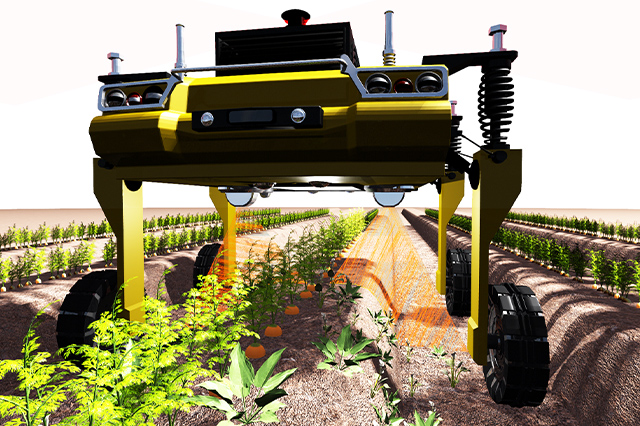
·AI Intelligent Weeding Robot.
·IoT information collection and automatic control for intensive planting, including temperature and humidity collection, wind damage early warning, and control of irrigation, ventilation and other related operations.
·Intelligent pasture, including automatic livestock counting, exercise data collection, early warning of wolf and bear intrusion with acoustic repellent, and unmanned aerial vehicle (UAV) automatic herding.

AI Weeding Robot

Imagination of the Global Industrial Application of AI in the Future — Focusing on Core Agricultural Implementation Scenarios


   Imagine a future where agricultural production is fully automated. On a 15-hectare family farm, intelligent tillage vehicles handle plowing, land leveling, and soil pre-treatment; sowing robots take charge of precision seeding; irrigation robots manage precise irrigation and fertilization; weeding robots use lasers for green, pollution-free, and efficient weeding and thinning; plant protection robots are responsible for ultrasonic pest control and spectral sterilization. Harvesting robots handle harvesting, packaging, and sorting, while logistics robots transport goods and deliver them to doorsteps according to orders. Perhaps all of this will be fully realized within the next 10 years.
  Agriculture is the most fundamental and important industry for humanity, and it will never be eliminated. With the advancement of human science and technology, it will only continuously improve production efficiency and change production methods, rather than being replaced.
  In the future, the industrial application of AI will evolve from a "single technical tool" into an intelligent hub for the entire industrial chain, penetrating all links of production, processing, circulation, and services. It will realize industrial restructuring through data-driven decision-making and intelligent replacement of manual labor. As a basic industry related to people's livelihood, agriculture is one of the main tracks for the industrial implementation of AI. Relying on AI to break the information barriers of "sky, air, land, people, and things", it will address the pain points of traditional agriculture, drive its transformation into precise, intelligent, intensive, automated, ecological, and sustainable smart agriculture, and realize the transformation of "AI defines new agriculture". By then, the nature of agriculture will be completely changed.

My Portfolio

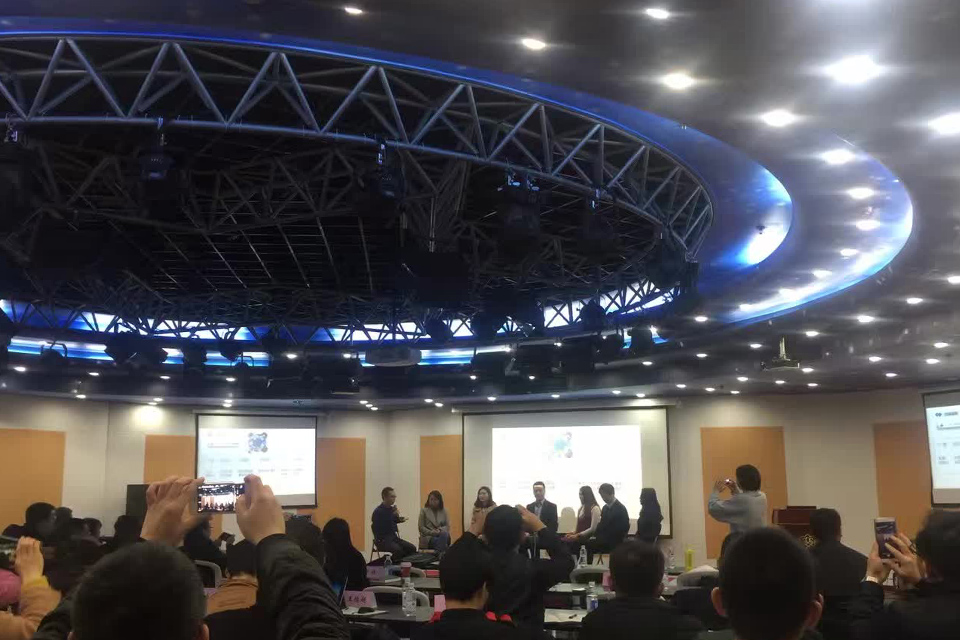
Technical Sharing

Seminar on AI Recognition Technology Based on OpenCV

Computer vision, a key branch of artificial intelligence, has developed rapidly in recent years and is widely applied in fields such as image processing, object detection, video analysis and autonomous driving. As one of the earliest and most widely used open-source computer vision libraries, OpenCV (Open Source Computer Vision Library) has been adopted by numerous developers and enterprises due to its rich functions and excellent cross-platform support. Meanwhile, a variety of similar tools and frameworks have emerged on the market, including Intel OpenVINO, Google MediaPipe, TensorFlow Object Detection API and PyTorch, each with its own characteristics in terms of performance, ease of use and applicable scenarios. Today, I will conduct a technical comparative analysis of OpenCV and several mainstream computer vision tools to provide a reference for selecting the appropriate solution.
1. Introduction
Computer vision technology has become one of the core driving forces behind the intelligent development of modern agriculture. As a flagship open-source library in the field of computer vision, OpenCV has become an important technical foundation for agricultural image recognition applications due to its rich image processing algorithms and efficient cross-platform support. This report will explore in detail the technical advantages of OpenCV in image recognition, focusing on its diverse applications in agriculture and looking ahead to future development trends.
2. Technical Advantages of OpenCV in Image Recognition
2.1 Rich and Mature Traditional Image Processing Algorithms
OpenCV integrates many classic algorithms including edge detection, corner detection, morphological operations, and color space conversion. These algorithms have been verified by years of industrial and scientific research applications and demonstrate efficient and stable performance. In agricultural scenarios, these basic algorithms can effectively extract key areas such as crop leaves, fruits, and lesions, providing a solid foundation for subsequent recognition and analysis.
2.2 Efficient Image Preprocessing and Enhancement Functions
The farming environment is complex and variable, with diverse lighting conditions and background interference. OpenCV provides a variety of image filtering methods (such as Gaussian filtering, median filtering), morphological transformations (erosion, dilation), color correction, and histogram equalization tools, which effectively improve image quality and enhance the accuracy and robustness of target recognition.
2.3 Deep Learning Model Integration Support
In recent years, OpenCV's DNN module supports loading models trained by mainstream deep learning frameworks including TensorFlow, Caffe, and PyTorch, enabling seamless integration of traditional image processing techniques with deep learning methods. This provides powerful technical support for complex agricultural tasks such as automatic disease recognition and fruit maturity evaluation.
2.4 Cross-Platform and Hardware Adaptation Advantages
OpenCV supports multi-platform operation including Windows, Linux, macOS, Android, and iOS, and supports CPU and partial GPU acceleration. This advantage allows flexible deployment on agricultural drones, mobile devices, embedded systems, and edge computing devices to meet the diverse application needs of agricultural production.
2.5 Open Source Ecosystem and Community Support
As one of the most widely used computer vision libraries worldwide, OpenCV has a large and active developer community and abundant documentation resources. Users can easily obtain sample codes, algorithm optimization suggestions, and the latest technical achievements, greatly reducing the development threshold for agricultural applications.
3. Application Directions of OpenCV in Agricultural Image Recognition 3.1 Crop Disease and Pest Detection
Using OpenCV's color space conversion, texture analysis, and image segmentation technologies, it can effectively identify lesion and pest areas on crop leaves. Quantitative analysis of lesion area and distribution helps farmers take timely preventive measures to avoid disease spread, ensuring yield and quality.
3.2 Plant Growth Monitoring
By collecting multi-temporal farmland images via drones or fixed cameras, OpenCV recognizes and measures plant morphological parameters (such as leaf area, plant height, chlorophyll content), supporting precise growth monitoring and providing scientific basis for fertilization and irrigation decisions.
3.3 Weed Detection and Classification
Accurate visual recognition is critical for agricultural automation equipment. OpenCV's image segmentation and object detection algorithms can distinguish crops from weeds, guiding weeding robots to perform precise positioning and treatment, reducing pesticide usage and promoting green agriculture.
3.4 Fruit Maturity Judgment
Based on OpenCV's color analysis and texture recognition technologies, automatic detection of fruit maturity helps scientifically schedule harvesting time, reduce fruit loss, and improve economic benefits.
3.5 Agricultural Machinery Visual Navigation
Agricultural autonomous machinery and robots use OpenCV to realize path planning, obstacle recognition, and avoidance, improving the automation and intelligence level of agricultural operations, enhancing efficiency and safety.
4. Typical Application Case Studies
4.1 Automatic Lesion Detection System
An intelligent agriculture company uses OpenCV to complete leaf image preprocessing, feature extraction, and classification, achieving automatic recognition of various common diseases. The system accuracy exceeds 85%, significantly improving disease diagnosis efficiency.
4.2 UAV Plant Protection Inspection Platform
Combining OpenCV’s real-time image processing capability, drones can quickly capture farmland images and complete growth status and anomaly monitoring, assisting agronomists in scientific management.
4.3 Intelligent Weeding Robot Vision System
Based on OpenCV’s weed detection and positioning technology, robots can perform precise weeding, saving labor and reducing environmental pollution, in line with the sustainable development concept of modern agriculture.
5. Future Development Trends
Deep Learning Integration Deepens
Combining OpenCV’s traditional image processing advantages with deep learning technology to improve accuracy and intelligence of agricultural visual recognition.
Multi-Sensor Fusion
Integrating optical images, infrared, LiDAR and other multi-source data to enhance recognition capability in complex environments.
Edge Computing and IoT Integration
Leveraging OpenCV’s cross-platform advantages to push intelligent visual algorithms to edge devices, achieving real-time farmland monitoring and response.
Automation and Intelligent Decision Support
Combining agricultural big data and AI analysis to achieve precision fertilization, irrigation, and pest control based on visual recognition results, promoting smart agriculture ecosystem construction.
6. Conclusion
OpenCV, with its mature image recognition technology system, flexible and efficient deployment capabilities, and rich community support, has become a core tool in the field of agricultural intelligent vision. It shows great potential in disease and pest detection, plant growth monitoring, weed recognition, fruit maturity judgment, and agricultural machinery visual navigation. In the future, with the integration of deep learning and edge computing technologies, OpenCV will play an even more crucial role in promoting green and intelligent agricultural development.

Research on Pest Control Based on Acoustic Wave Technology

Abstract

With the development of green agriculture and smart agriculture, the environmental pollution and pest resistance problems caused by traditional chemical pesticides have become increasingly prominent. Acoustic wave pest control, as a green and environmentally friendly physical control technology, has received widespread attention. This paper systematically analyzes the bioacoustic principles of acoustic pest control and its effects on pest physiology and behavior, designs and implements an intelligent acoustic pest control system combined with IoT and artificial intelligence technologies to achieve precise pest identification and repelling. Field trials verified the system's effectiveness in controlling various pests. The results show that acoustic pest control technology has significant advantages in reducing pesticide dependence and protecting the ecological environment, with broad application prospects.

Keywords

Acoustic pest control; Bioacoustics; Green plant protection; Intelligent control; Internet of Things (IoT)

1. Introduction

In recent years, with the promotion of global agricultural green transformation, reducing pesticide use and environmental pollution has become a key goal for sustainable agricultural development. Traditional pesticide control has problems such as residue pollution and increased pest resistance, urgently requiring the development of new environmentally friendly and efficient pest control technologies. Acoustic pest control technology, based on bioacoustic principles, interferes with pest physiological and behavioral systems through acoustic waves of specific frequencies and sound pressure, achieving chemical-free physical repelling, meeting the needs of green plant protection. This paper aims to explore the mechanism, system design, and application effects of acoustic pest control technology to promote its application in modern agriculture.

2. Bioacoustic Principles of Acoustic Pest Control

Pests have significantly different sensitivities to different frequency bands of sound waves. For example, Lepidoptera larvae are sensitive to 2kHz to 5kHz sound waves, while rodent pests exhibit obvious avoidance behavior to ultrasound above 20kHz. Acoustic waves affect pest auditory, nervous, and reproductive systems, interfering with behaviors such as foraging and mating, achieving repelling or killing effects. Some studies have pointed out that pulse acoustic waves can effectively reduce pest feeding and reproductive success rates, with minimal impact on natural enemies, demonstrating good ecological compatibility.

3. Design of Intelligent Acoustic Pest Control System

This study designed an intelligent acoustic pest control system based on piezoelectric ceramic speakers and ultrasonic sensors. The system includes the following modules:

Hardware Module: Miniaturized acoustic wave generator supporting frequency modulation and pulse modulation, suitable for greenhouse and field environments.
Recognition Module: Integrates AI image recognition and acoustic frequency analysis algorithms for real-time monitoring of pest species and density.
Control Module: Automatically adjusts acoustic frequency and pattern based on recognition results to achieve precise repelling.
Communication Module: Based on LoRa IoT technology for remote device management and data collection.

4. Field Trials and Effect Evaluation

Field trials were conducted in two typical scenarios: greenhouse tomatoes and stored wheat. By setting control and acoustic treatment groups, pest density, crop damage rates, and yield changes were monitored. The results showed:

Pest density in the acoustic treatment group decreased by an average of 45% compared to the control group;
Crop damage rate decreased by more than 40%;
Yield increased by about 10%, with no significant negative ecological impact.

The experiments demonstrate that the intelligent acoustic pest control system has a significant repelling effect in real agricultural environments.

5. Discussion

This study proves the effectiveness and environmental friendliness of acoustic pest control technology. The integration of intelligent control and IoT technology improves system adaptability and precision. Future research should focus on optimizing acoustic parameters, expanding frequency bands suitable for multiple pests, enhancing system anti-interference ability, and further evaluating ecological impacts on non-target organisms to promote practical application.

6. Conclusion

Acoustic pest control technology, as a green and environmentally friendly physical control method, combined with intelligent identification and IoT remote control, achieves precise pest monitoring and effective repelling. This technology shows broad application prospects in reducing pesticide use and protecting the ecological environment and is an important technological path for promoting sustainable smart agriculture.

Contact

house no: 979

Yunhan Road, Pudong New Area, Shanghai, China

+86 15802176029